
Choosing the right septic tank system is one of the most important decisions you will make as a property owner. Get it right, and you will have a reliable, compliant wastewater management solution that works quietly in the background for decades. Get it wrong, and you are looking at drain field failure, costly repairs, and potential environmental damage and pollution.
At Mid Valley Septics, we have been designing and installing septic tank systems across Coffs Harbour and surrounding regions for over 25 years. In that time, we have seen every soil type, site condition, and council requirement the Mid North Coast of NSW has to offer, and we have learned that no two properties are the same. The right system for your neighbour may be entirely wrong for you. Here are six septic tank system designs we install, how each septic tank system works, and which type of property suits each one best.
How Every Septic System Works
Before diving into the six designs, it helps to understand what every septic system has in common. All on-site wastewater systems collect sewage and household wastewater, provide some level of treatment, and then safely disperse the treated effluent back into the environment, typically, through the soil. Good septic tank design also supports long-term wastewater management by separating sewage solids early and directing treated water to a drain field in a way that helps prevent pollution.
The septic tank is always the first stage: a buried, watertight chamber where solids sink to form a sludge layer, grease floats as scum, and clarified liquid effluent sits in between. Anaerobic bacteria inside the tank digest organic matter continuously. In a well-built concrete septic tank, internal baffles and the inlet are set to slow incoming sewage and allow solids to settle, which helps ensure stable treatment. What differs between system types is how that effluent is treated further and how it is dispersed, and that is where soil type, water table depth, land area, and environmental sensitivity all come into play.
Every installation Mid Valley Septics undertakes begins with a thorough site assessment: soil permeability testing, water table evaluation, council requirement review, and a conversation about your household’s specific needs. This early planning step is where we confirm the septic tank size, check the condition and fall of each pipe, and ensure the installation will meet regulations and site requirements. Only then do we recommend a system.
1. Tank and Absorption Trench System
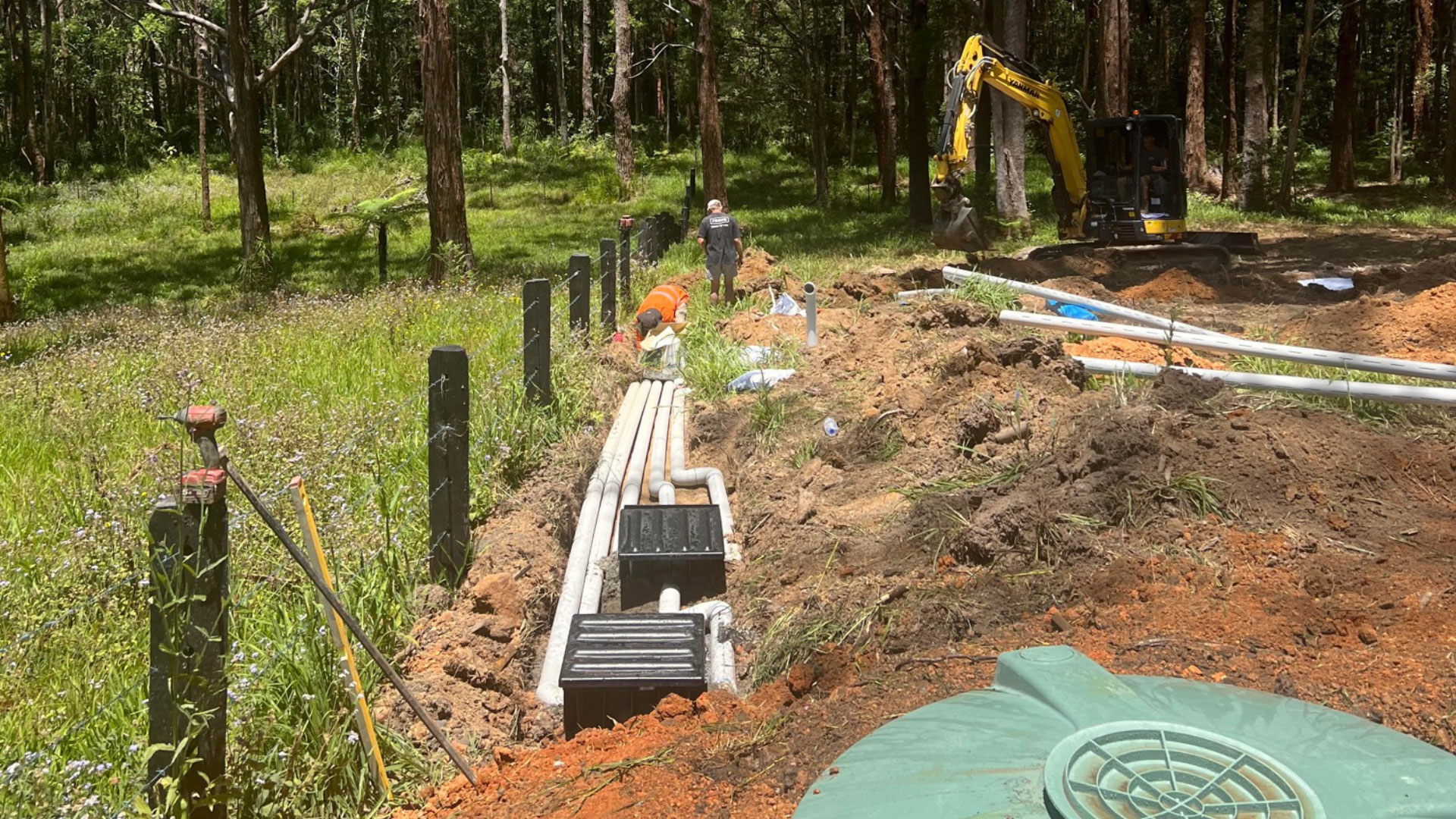
The tank and absorption trench system (often called a conventional system) is the most widely installed septic tank design in Australia, and for good reason. Where site conditions are suitable, it is a simple, reliable, and the most cost-effective option available.
Household wastewater flows by gravity into a two-chamber septic tank, where primary treatment occurs. A correctly sized septic tank (commonly specified in litres) is chosen to allow enough retention time for solids and sludge to separate from the liquid, which improves treatment efficiency. Clarified effluent then exits through an outlet pipe into a series of perforated pipes laid in gravel-filled absorption trenches below the ground surface. The soil beneath and around the trenches does the work of filtering pathogens and absorbing nutrients as effluent slowly percolates downward. In many installations, a concrete tank and correctly laid pipework help prevent seepage and protect groundwater.
There are no pumps, no motors, and no electronics (just gravity and biology), and the septic tank does the primary separation. That simplicity is what makes it so dependable when the conditions are right.
Is a tank and trench system right for you?
This design works best on sites with well-draining loam or sandy loam soils, a water table well below the trench depth, enough land area for the required trench length, and relatively flat to gently sloping terrain, so the septic tank and drain field can function properly. A percolation test will confirm whether your soil meets the requirements.
| Best for | Good-draining soil, flat to gently sloping sites, adequate land area |
| Maintenance | Inspection every 1–2 years; pump-out every 3–5 years Regular inspection and maintenance help prevent solids carryover, keep the septic tank working efficiently, and ensure the system continues to comply with regulations. |
| Cost | Lowest of all system types |
| Limitation | Not suitable for clay soils, high water tables, or small blocks |
2. Aerated Wastewater Treatment System (AWTS)
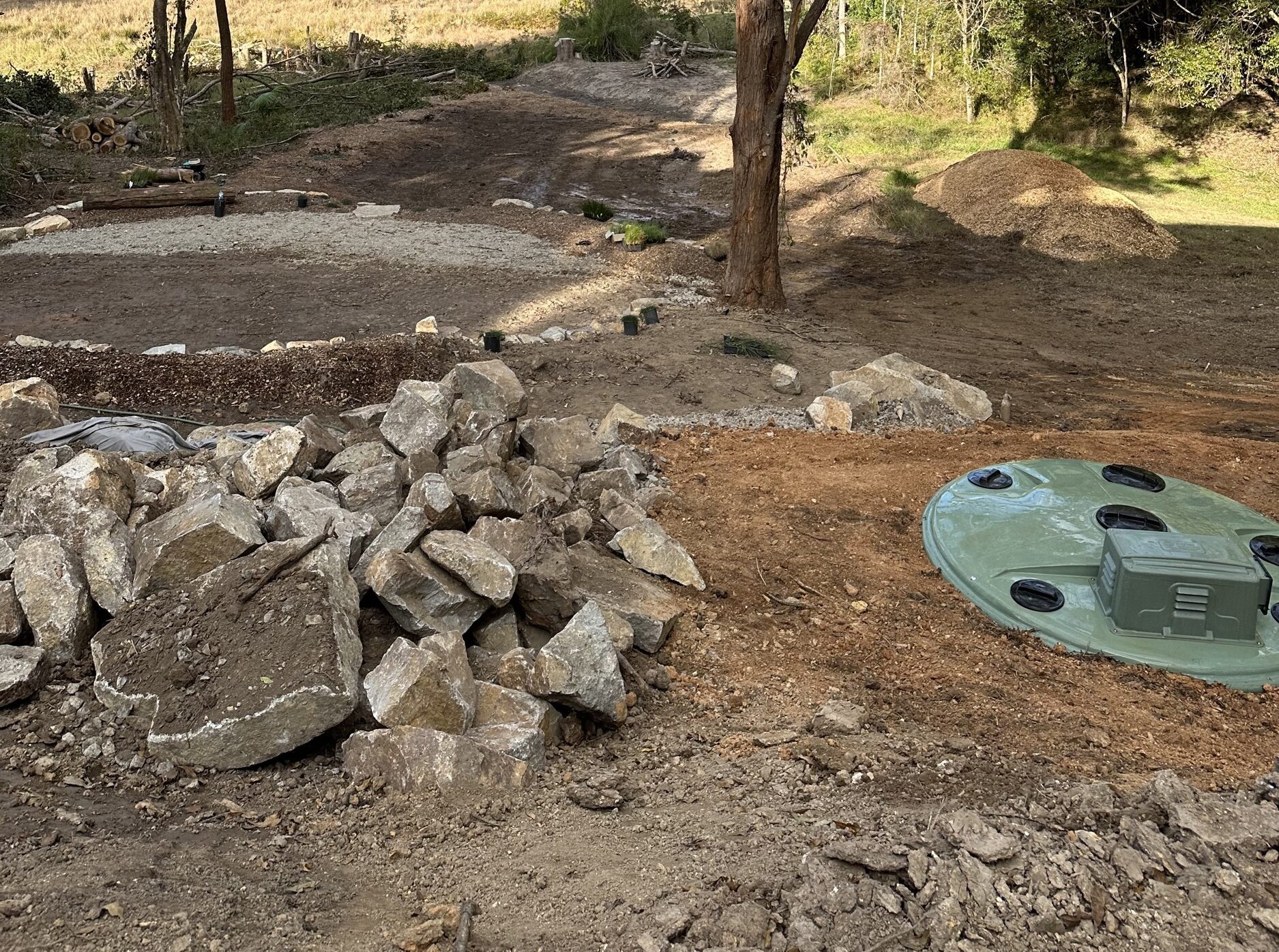
An aerated wastewater treatment system (commonly called an AWTS) takes septic tank treatment several steps further than a conventional septic tank. Rather than relying solely on anaerobic bacteria in a sealed chamber, an AWTS actively introduces air into the process, supporting aerobic bacterial activity that breaks down waste far more efficiently.
Inside the unit, wastewater moves through a series of chambers: primary settling, aeration (where a compressor injects oxygen), clarification, and finally disinfection (typically via chlorination or UV light). Because the treatment process is more intensive than a basic septic tank, an AWTS can help protect the environment by reducing pollution risks where discharge controls are strict. The resulting effluent is clean enough to be pressure-dosed through subsurface irrigation pipes directly onto lawns and gardens, making it a popular choice for homeowners who want to put their treated wastewater to use, provided the septic tank and treatment unit are maintained.
AWTS units are compact and self-contained, which means they can be installed on smaller blocks where a conventional drain field would not fit. They are also the go-to system in environmentally sensitive catchments where councils require a higher standard of wastewater treatment. For some sites, councils may also require a concrete septic tank or specific tank configurations to ensure long-term durability and proper wastewater management.
Is an AWTS right for you?
AWTS suits sites with poor or clay-heavy soils, smaller blocks, properties close to waterways, or homeowners who want to reuse treated effluent for garden irrigation. Bear in mind that AWTS units require quarterly servicing by a licensed technician. This is a mandatory condition of operation in NSW.
| Best for | Poor drainage, small blocks, effluent reuse, near waterways |
| Maintenance | Quarterly servicing (mandatory in NSW) |
| Cost | Medium to high |
| Limitation | Power-dependent; ongoing servicing fees; disinfection consumables required |
3. Sand Filter System
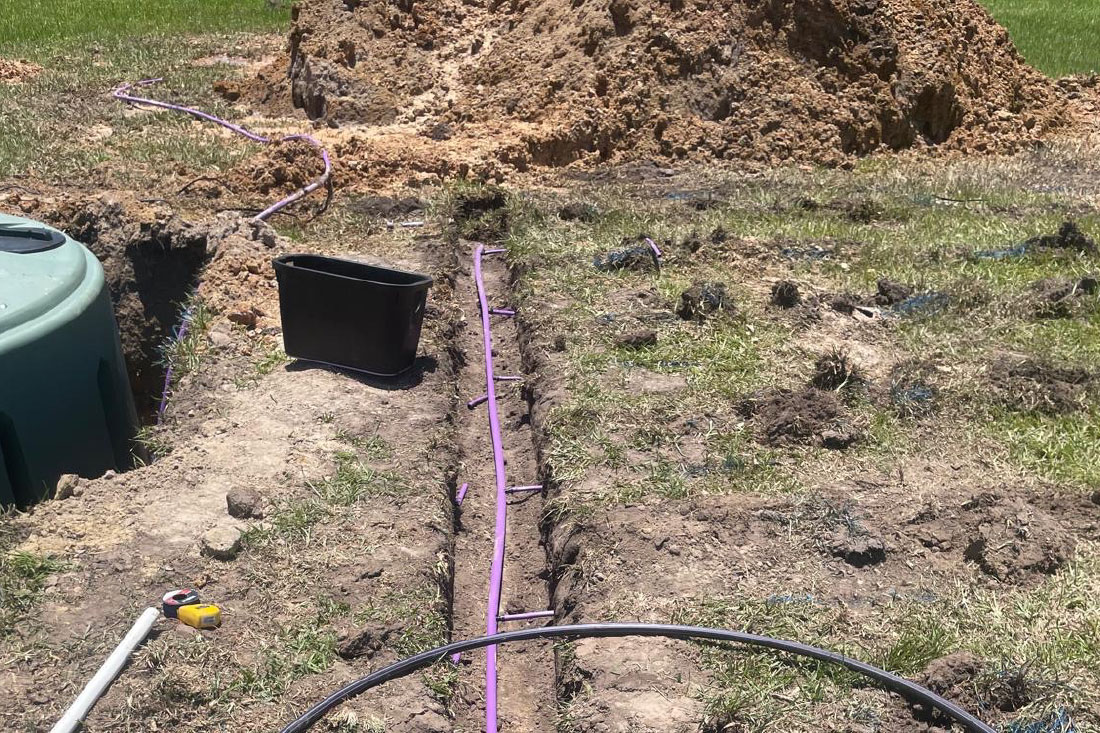
A sand filter system passes effluent from the septic tank through a bed of specially graded sand before it is dispersed or discharged. This additional stage of wastewater treatment can reduce pollution risk and help protect the environment in sensitive areas. The sand medium provides highly effective physical and biological treatment, removing suspended solids, pathogens, and biochemical oxygen demand to a standard well above what a conventional soil absorption trench can achieve on its own.
Sand filters can be configured as single-pass systems(where effluent moves through the sand once before final dispersal) or as recirculating systems, where effluent passes through the bed multiple times before discharge. Recirculating sand filters produce exceptionally high-quality treated water and are specified for sites where environmental discharge standards are most stringent, and where a septic tank alone is not enough.
Despite requiring a larger installation footprint than some alternatives, sand filter systems are highly dependable once established. Mid Valley Septics installs and maintains sand filter systems across the Coffs Harbour region, including properties in coastal and near-waterway locations where effluent quality is closely regulated.
Is a sand filter system right for you?
If your property sits near a waterway, estuary, or drinking water catchment, or if your council requires a higher level of treatment than a conventional system can provide, a sand filter is often the most practical, compliant solution.
| Best for | Sites near waterways, catchments with strict discharge requirements |
| Maintenance | Annual sand media inspection; pump and distribution system checks Keeping the septic tank pump, distribution box, and each pipe clear helps ensure the filter performs as intended. |
| Cost | Medium (more than conventional, less than AWTS) |
| Limitation | Larger footprint than some systems; sand media replacement after 10–15 years |
4. Sand Mound Septic Tank System
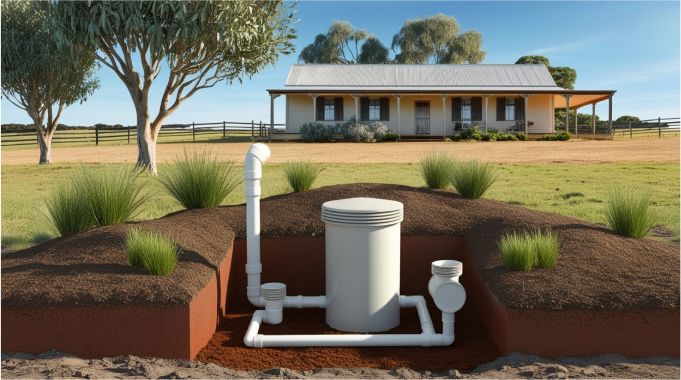
A mound septic tank system is the engineering solution for sites where the soil is too shallow, too dense, or too saturated for an in-ground drain field. Rather than burying the dispersal system below grade, the drain field is constructed above the natural ground surface within an engineered mound of imported sand and gravel fill.
Because the septic tank sits below the mound, a pump chamber is required to move effluent upward into the mound at timed intervals. A durable concrete septic tank is commonly used here to allow stable operation, and dosing is set to prevent overloading the mound. The imported sand provides the treatment medium, and the elevation ensures effluent travels through adequate depth before reaching the water table or bedrock below. A sand mound system is a well-proven solution where conventional in-ground drainage is genuinely not possible.
Is a sand mound system right for you?
If your percolation test fails, your water table sits seasonally high, or you have dense clay or shallow rock preventing in-ground absorption, a sand mound system may be your most practical compliant option. Note that sand mound systems are more visually prominent and require a larger footprint. Confirm with your local council that this design is approved for your area.
| Best for | High water table, shallow soil over rock, clay-dominant soil profiles |
| Maintenance | Regular pump inspection; routine tank pump-outs; mound surface monitoring Routine septic tank servicing is essential to ensure the pump cycles correctly and to prevent sludge from reaching the drain field. |
| Cost | High (due to imported fill, pump system, and earthworks) |
| Limitation | Visually prominent; large footprint; not permitted in all council areas |
5. Reed Bed Septic Tank System
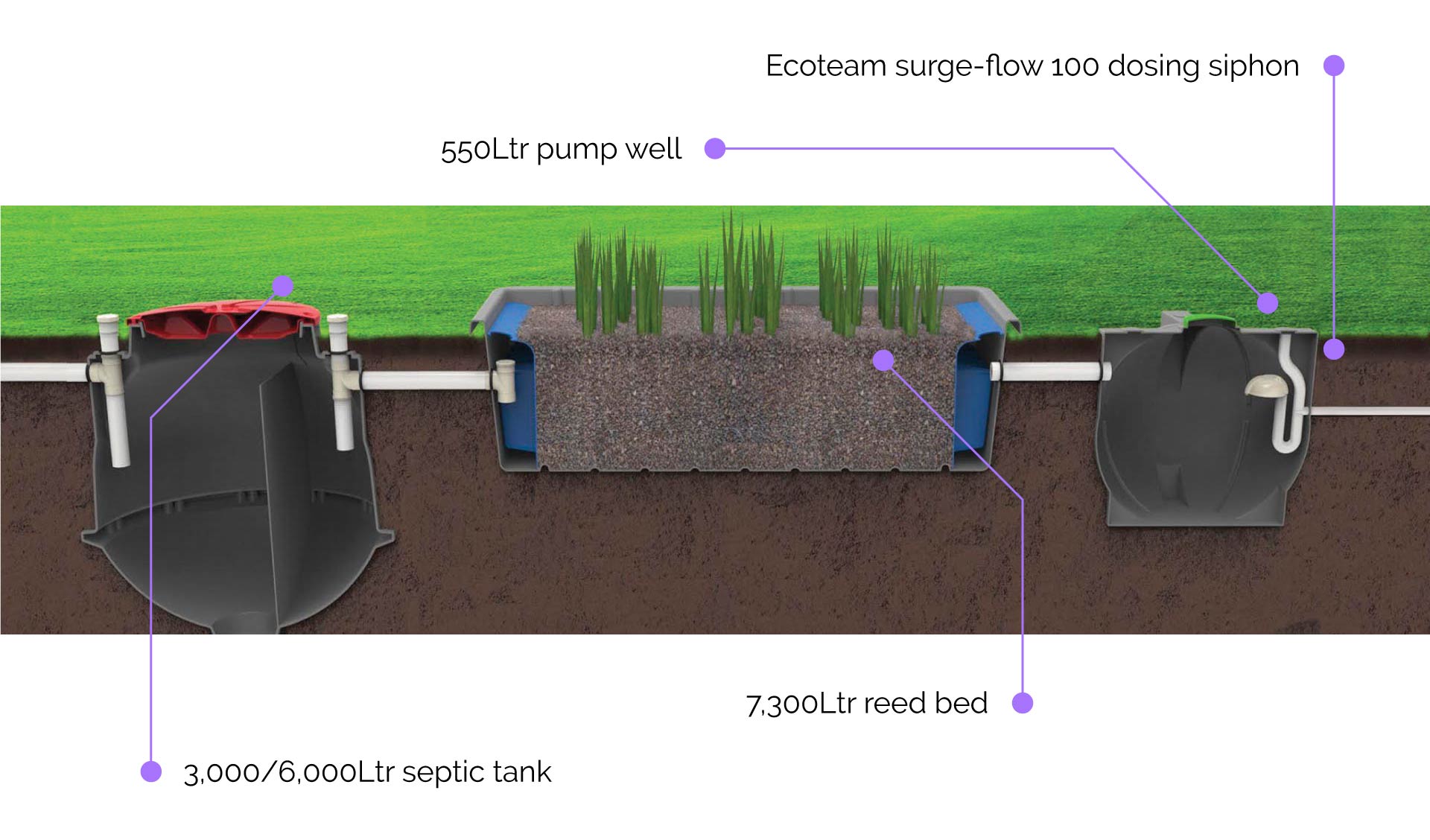
A reed bed septic tank system (also known as a constructed wetland) is the most naturally integrated of all septic designs. After primary treatment in the septic tank, effluent flows into a purpose-built shallow basin filled with gravel and planted with wetland plant species such as reeds, rushes, or sedges. A well-laid inlet pipe and outlet pipe help keep flows even and prevent blockages that can disrupt the process.
As effluent moves slowly through the root zone, it is treated by a combination of physical filtration through the gravel media, microbial activity around the root systems, and direct nutrient uptake by the plants themselves. Most residential reed bed systems employ a subsurface-flow design, where effluent travels horizontally through the gravel below the surface, maintaining the process’s containment and hygiene while the septic tank handles upstream separation.
Reed bed systems have relatively low ongoing costs and maintenance requirements compared to mechanical systems. They can also become genuine landscape features: attractive, habitat-creating elements that sit naturally within a rural or semi-rural property.
Is a reed bed system right for you?
Reed beds suit larger rural properties, particularly in environmentally sensitive areas where nutrient removal is important. They require adequate space for installation and a willingness to manage the plant community over time. They are less suited to properties that experience extended wet periods, where the soil may become saturated and reduce treatment effectiveness.
| Best for | Large rural blocks, eco-sensitive areas, low ongoing maintenance priority |
| Maintenance | Seasonal plant management; inlet/outlet pipe checks; routine tank pump-outs Seasonal checks should ensure the inlet remains clear, each pipe stays connected, and the septic tank is pumped before excess sludge affects performance. |
| Cost | Medium to high (specialist design and construction required) |
| Limitation | Large footprint; reduced performance during extended wet periods |
6. Evapotranspiration Bed (Septic Tank System)
An evapotranspiration (ET) bed is an above-ground or shallow-installed system designed for sites where in-ground effluent dispersal is not feasible due to shallow or highly impermeable soil. Rather than relying on soil absorption, an ET bed disperses effluent by encouraging it to evaporate into the atmosphere and be taken up by plants (a process called evapotranspiration).
The system typically consists of a lined bed filled with sand or gravel and planted with deep-rooted, water-tolerant vegetation. Effluent is dosed into the bed from the septic tank, and the combined effect of evaporation from the surface and transpiration through the plants removes moisture from the system without it entering the groundwater. A correctly lined bed and controlled dosing allow the tank to operate without unintended discharge to ground or groundwater.
ET beds are well-suited to drier climates where evaporation rates are high enough to manage the effluent load effectively throughout the year. In wetter regions or during extended wet periods, the capacity of the bed to process effluent may be reduced, and supplementary disposal methods may be required.
Is an evapotranspiration bed right for you?
ET beds are a practical solution for properties with shallow soil profiles over rock or dense clay where other systems cannot be installed. They work best in drier climates and on sites with adequate space. If your property is in a high-rainfall area on the Mid North Coast, your designer will advise whether an ET bed can be sized to handle your local conditions or whether a different system is more appropriate.
| Best for | Shallow or impermeable soil, drier climate zones, no groundwater dispersal option |
| Maintenance | Minimal (seasonal plant health inspection; routine tank pump-outs) |
| Cost | Medium |
| Limitation | Reduced performance during extended wet weather; requires adequate land area Where ET performance is marginal, your designer may recommend a larger tank capacity (in litres) or staged dosing to ensure the system can manage peak wastewater loads. |
Mid Valley Septics installs reed bed systems for rural and semi-rural properties across the Coffs Harbour region.
Our team can assess whether a reed bed is a viable and approved option for your site
How to Choose the Right System for Your Property
Every site is different, and the best septic tank design is the one that matches your specific conditions, not the one your neighbour has or the one that costs the least upfront. The following factors must all be assessed before a system can be recommended:
- Soil type and percolation rate – determine whether in-ground absorption is viable and how large the drain field needs to be.
- Water table depth across seasons – high seasonal water tables rule out conventional in-ground systems.
- Available land area – Sand mound systems, ET beds, and reed beds all need significant space; compact AWTS units are better for smaller blocks, but you still need room for the septic tank and service access.
- Household size and daily wastewater volume – tank capacity and dispersal area must be matched to how much wastewater your household generates. Designers often estimate flows in litres per day to ensure the septic tank and dispersal area are sized for your household wastewater and sewage load.
- Proximity to waterways, bores, and boundaries – council setback requirements and Australian Standards (AS/NZS 1547) govern minimum distances.
- Local council requirements – some councils mandate specific system types in particular areas, particularly near sensitive waterways or drinking water catchments.
Once these factors are understood, the right system often becomes clear. Where multiple options are viable, your designer will weigh upfront installation cost against long-term maintenance requirements, operational reliability, and environmental performance to arrive at the best recommendation for your situation. The goal is to ensure proper wastewater management, reduce the need for corrective work, and protect the environment throughout the septic tank’s lifespan.
Talk to Mid Valley Septics
With more than 25 years of experience across Coffs Harbour and 32+ surrounding suburbs, Mid Valley Septics has the local knowledge, accreditations, and hands-on expertise to design, install, and maintain the right septic tank system for your property. We are a family-owned and operated business, and we take the time to assess every site individually because we know that getting the septic tank design right from day one saves you time, money, and headaches for years to come.
Whether you are building a new home, replacing an ageing system, or simply trying to understand what is on your property, we are here to help. If you need guidance on septic tank maintenance, inspection intervals, or when to pump, our team can explain the proper steps to prevent failures and protect your home.
Ready to find the right septic system for your property?
Contact the Mid Valley Septics team today for an obligation-free site assessment and quote. We service Coffs Harbour, Nambucca Heads, Valla Beach, Bowraville, Taylors Arm, Missabotti, and 32+ surrounding suburbs.